

Wisdom Teeth Westfield NJ
What Are Wisdom Teeth?
By the age of 18, the average adult has 32 teeth: 16 teeth on top and 16 teeth on the bottom. Each tooth in the mouth has a specific name and function. The teeth in the front of the mouth (incisors, canine, and bicuspid teeth) are ideal for grasping and biting food into smaller pieces. The back teeth (molar teeth) are used to grind food into a consistency suitable for swallowing.
The average mouth is made to hold only 28 teeth. It can be painful when 32 teeth try to fit in a mouth that is meant to hold only 28 teeth. These four other teeth are your third molars, also known as “wisdom teeth”.
Why Should I Have My Wisdom Teeth Removed?
Wisdom teeth are the last teeth to erupt within the mouth. When they align properly and gum tissue is healthy, wisdom teeth do not have to be removed. Unfortunately, this is not what generally happens. The extraction of wisdom teeth is necessary when they are prevented from properly erupting within the mouth. They may grow sideways, only partially emerge from the gum, or can even remain trapped beneath the gum and bone. Impacted teeth can take many positions in the bone as they attempt to find a pathway that will allow them to successfully erupt. An impacted tooth simply means that it is “stuck”.
Experiencing Wisdom Teeth Issues?
Contact us with any questions or to schedule an appointment.
These poorly positioned impacted teeth can cause many problems. When they partially erupt, the opening around the teeth allows bacteria to grow and will eventually cause an infection. The result: swelling, stiffness, pain, and illness. The pressure from the erupting wisdom teeth may move other teeth and disrupt the orthodontic or natural alignment of teeth. The most serious problem occurs when tumors or cysts form around the impacted wisdom teeth, resulting in the destruction of the jawbone and healthy teeth. Removal of the impacted teeth usually resolves these problems. Early removal is recommended to avoid complications.
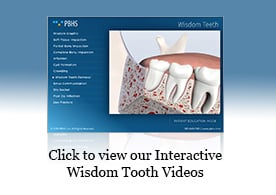
Wisdom Teeth Presentation
To provide you with a better understanding of wisdom teeth, we have provided the following multimedia presentation. Many common questions pertaining to wisdom teeth are discussed.
Oral Examination
With an oral examination and x-rays of the mouth, Dr. Gold can evaluate the position of the wisdom teeth and predict if there are present or future potential problems. Studies have shown that early evaluation and treatment result in a superior outcome for the patient. Patients are generally first evaluated in their mid-teenage years by their dentist, orthodontist, or by an oral and maxillofacial surgeon.
All outpatient surgery is performed under appropriate anesthesia to maximize patient comfort. Dr. Gold is trained, licensed, and highly experienced in providing various types of anesthesia for patients.
Removal
In most cases, the removal of wisdom teeth is performed under local anesthesia, laughing gas (nitrous oxide/oxygen analgesia), or general anesthesia. These options, as well as the surgical risks (i.e., sensory nerve damage, sinus complications), will be discussed with you before the procedure is performed. Once the teeth are removed, the gum is sutured. To help control bleeding bite down on the gauze placed in your mouth. You will rest under our supervision in the office until you are ready to be taken home. Upon discharge, your postoperative kit will include postoperative instructions, a prescription for pain medication, antibiotics, and a follow-up appointment in one week. If you have any questions, please do not hesitate to call us at Ronen Gold, DDS Office Phone Number 908-232-5551.
Our services are provided in an environment of optimum safety. We utilize modern monitoring equipment and our staff is experienced in anesthesia techniques.
Experiencing Wisdom Teeth Issues?
Contact us with any questions or to schedule an appointment.
Ronen Gold, DDS
Patient Review By Scott F
Great office, staff and doctor
- Scott F
Patient Review By Helene C
Dr Gold was amazing from start to finish. My daughter felt so comfortable as every step before and after was explained completely. Dr Gold is an excellent surgeon she is a few hours post op and so far she’s doing great. I’d highly recommend Dr Gold!
- Helene C
Patient Review By Timothy S
Dr. gold and his staff were very understanding of my son's issues and demonstrated the utmost in professionalism.
- Timothy S
Patient Review By Tressie H
I’m glad I found Dr Gold. He is such a kind and caring Oral surgeon. I would definitely recommend him to others as I’ve already done. His staff is amazing
- Tressie H
Patient Review By Nadine M
We had an excellent experience with Dr. Gold and the entire office. From the very beginning of my daughter’s orthodontic treatment, the staff was friendly, professional, and incredibly supportive. Everything was well organized, and they always took the time to answer our questions and make my daughter feel comfortable. Dr. Gold also handled my daughter’s wisdom teeth removal, and that experience was just as positive. The procedure and follow-up care were smooth, thorough, and reassuring. We truly felt cared for every step of the way. I highly recommend Dr. Gold and this wonderful team to anyone looking for outstanding orthodontic and dental care.
- Nadine M
Patient Review By Jackson I I
Great experience with Dr Gold and his staff.
- Jackson I I
Patient Review By Thomas
Smooth procedure from start to finish
- Thomas
Patient Review By Julia D
I had a very pleasant experience with my wisdom tooth removal. Initially, I was a little nervous but was in shock at how quick and painless it was! Dr. Gold and the staff were very nice and made me feel comfortable. I would definitely recommend and will return in the future if needed !
- Julia D
Patient Review By Giada R
N/A
- Giada R
Patient Review By Eugert K
All around great team. Very professional, efficient and competent. Thank you for your help!
- Eugert K
Patient Review By JUAN M
Dr. Ronen Gold is an exceptional specialist and surgeon! He was exactly what I was looking for — experienced, knowledgeable, and focused on quality care. I 100% recommend him. The procedure I needed was described by others as complex, tedious, and painful, but with Dr. Gold, my experience was the complete opposite — fast, efficient, and completely painless. His confident yet friendly attitude, genuine smile, and caring approach made me feel at ease from start to finish. Thank you, Dr. Ronen Gold, for your outstanding care and professionalism!
- JUAN M
Patient Review By David D
Procedure - quick and painless. Recovery - also no pain, no swelling!
- David D
Patient Review By Kathy L
My 2 children had wisdom teeth removed. Great experience! Highly recommend Dr. Gold
- Kathy L
Patient Review By Michael B
I highly recommend this practice, the experience was exceptional, even for having a wisdom tooth extracted (lol). But seriously, the professionalism displayed by the doctor, his assistants and the front desk staff is aces. Additionally, the procedure went well, no pain, no issues. Thank you
- Michael B
Patient Review By Monica L
Very friendly and knowledgeable. Did a great job removing all four wisdom teeth with minimal recovery time. The procedure was smooth and painless.
- Monica L
Patient Review By Ritu j
Overall, had a great experience, the wait time and professionalism the office staff and the doctor provided was exceptional. Have never seen a facility operate as quick and efficient as they do really would recommend this experience to anyone who is looking for wisdom teeth removal.
- Ritu j
Patient Review By Daniel B
We had a very good experience with Dr. Gold. He was super assuring with his knowledge.
- Daniel B
Patient Review By Pam C
Very professional kind and courteous. Dr Gold is an excellent oral surgeon and we were in great hands with him!
- Pam C
Patient Review By Heather J
Dr. Gold and his staff made the process very easy and comfortable. Very clear post operative instructions. Thank you for the wonderful care.
- Heather J
Patient Review By Aylinn B
Dr Gold is the best!
- Aylinn B
Patient Review By Oluwatitofunmi O
Dr. Gold is the best! He called my son to check on him the night his wisdom teeth were removed. The follow up check was smooth and quick. Thanks for everything!
- Oluwatitofunmi O
Patient Review By Sophia N
I appreciate the level of care provided by Dr. Gold and his medical team.
- Sophia N
Patient Review By Alejandro R
Everything was perfect
- Alejandro R
Patient Review By Amani R
awesome service and amazing staff !!
- Amani R
Patient Review By Mikayla P
The staff were very friendly and made me feel safe and comfortable. And Dr. Gold took his time explaining to me the procedure so I understood why and how the procedure had to be done. I was also very appreciative since I get a lot of anxiety over medical procedures, so when I woke up everyone was very calm and understanding.
- Mikayla P
Patient Review By Justin C
Amazing and kind service.
- Justin C
Patient Review By Jeremy M
Doctor is very thorough in explaining procedure. Office is clean and staff is nice. No waiting and always on time.
- Jeremy M
Patient Review By Jennifer M
Professionalism from Dr Gold and his staff from consultation to scheduling appointments , explanation of insurance benefits ,the day of procedures - A good experience for both my sons . Thank you .
- Jennifer M
Patient Review By Diana G
Dr. Ronen Gold was great, wisdom teeth removal was as easy as it can be. The procedure was not painful. He did a great job!
- Diana G
Patient Review By Crystal G
Amazing experience.
- Crystal G
Patient Review By John A
Love them!
- John A
Patient Review By Brian D
Dr. Gold is excellent. I felt at ease with him and he made the experience quick and comfortable.
- Brian D
Patient Review By adrian t
My second wisdom tooth removal and once again it was fast, efficient and having the gas and anesthesia made it painless
- adrian t
Patient Review By Nevaeh Y
Immaculate space and courteous staff. I was in and out easily with no questions after.
- Nevaeh Y
Patient Review By Faith M R
Everyone was so sweet and very welcoming. The staff really helped me grow less nervous with silly jokes and comments.
- Faith M R
Patient Review By Olivia P
thank you all- this was an exceptional experience
- Olivia P
Patient Review By Hector D
Easy experience, dr gold is very professional.
- Hector D
Patient Review By Chris S
Dr. Gold and his entire staff are very kind and professional. Everything was explained in depth and they left me prepared for a quick and easy recovery
- Chris S
Patient Review By Jill R
Great experience especially for a place you don't want to have to go to.
- Jill R
Patient Review By Jodi S
Very pleased with Dr. Ronen. My daughter had impacted wisdom teeth. Her procedure went very well. I’ll be bringing my other children when they need this done.
- Jodi S
Patient Review By Patrick R
Very organized, informative, and helpful
- Patrick R
Patient Review By Andres L
The staff were very friendly and the office is very nice. Dr. Gold was great and did an amazing job with the removal, and I would highly recommend him to anyone
- Andres L
Patient Review By Andrew W
Very friendly environment, and the procedure was much faster than I expected
- Andrew W
Patient Review By HELEN F
DR. GOLD TREATED MY SON. THE ENTIRE PROCESS WAS PLEASANT, PRICING WAS TRANSPARENT AND THE STAFF WAS VERY HELPFUL. I WAS VERY IMPRESSED BY THE FACT THAT DR. GOLD FOLLOWED UP WITH A PHONE CALL THE AFTERNOON OF THE PROCEDURE TO MAKE SURE MY SON WAS OKAY!
- HELEN F
Patient Review By Roman S
All good, so far Consult was informative
- Roman S
Patient Review By Allison Eggert N
We’re happy everything went well!!
- Allison Eggert N
Patient Review By Josh S
My son attended the consult on his own. It was his second consult. He strongly preferred Dr Gold to the other surgeon. I did not meet Dr Gold as my husband was the one to accompany him to the surgery, but everything went very smoothly and I only heard good things 🙂
- Josh S
Patient Review By Mayson H
I am grateful that I was referred to this office. My procedure went smoothly and everyone made you feel comfortable and less anxious. Everything was explained in detail
- Mayson H
Patient Review By Stephanie C
I highly recommend Dr. Gold! I have a very low tolerance for pain and I was shocked how quickly and seamlessly my wisdom tooth was removed. His office workers were also so supportive and kind throughout the whole process. I felt that I was in the best hands. Thank you for your kindness and precision! Will definitely be recommending!
- Stephanie C
Patient Review By Joe B
Thank you!
- Joe B